Project Report

Problem topic: Wasted foods in AGU’s cafeteria

Problem definition: AGU students who eat in the university’s dining hall are taking meals which they can’t finish all of them. Therefore ending up wasting food.

Survey results: A survey was conducted randomly for AGU students and it is founded that 92.3 % of survey participants have eaten their lunch in the cafeteria with a ratio of ½ of them eat five times a week. 80% of the respondents are not able to finish their foods.

38 % of the students waste food because they simply don’t like them. 37% think that the food is not cooked well. And the remaining students have mixed opinions like they think the portions are too big or they are spicy/salty or they are eating the food before they are hungry. We have also conducted this research to find out what are the most wasted foods. The most wasted meal is the main meal by 58% percent followed by rice (41%) and soup with 37% [1].

It is found out from the survey that even though participants are not satisfied with the dining hall’s service they prefer to eat in the cafeteria because there is no enough place to eat both cheap and delicious meals. Also, there is a bias about women eat less than men so it is believed women waste more food than men. Actually, according to the survey results, women choose vegetables and approximately 50.6% of them waste their main course. On the other hand, men choose meat and 70 % of them waste their main course. So unproven believe is not real at all, men have a higher carbon footprint comparing to women about food consumption.
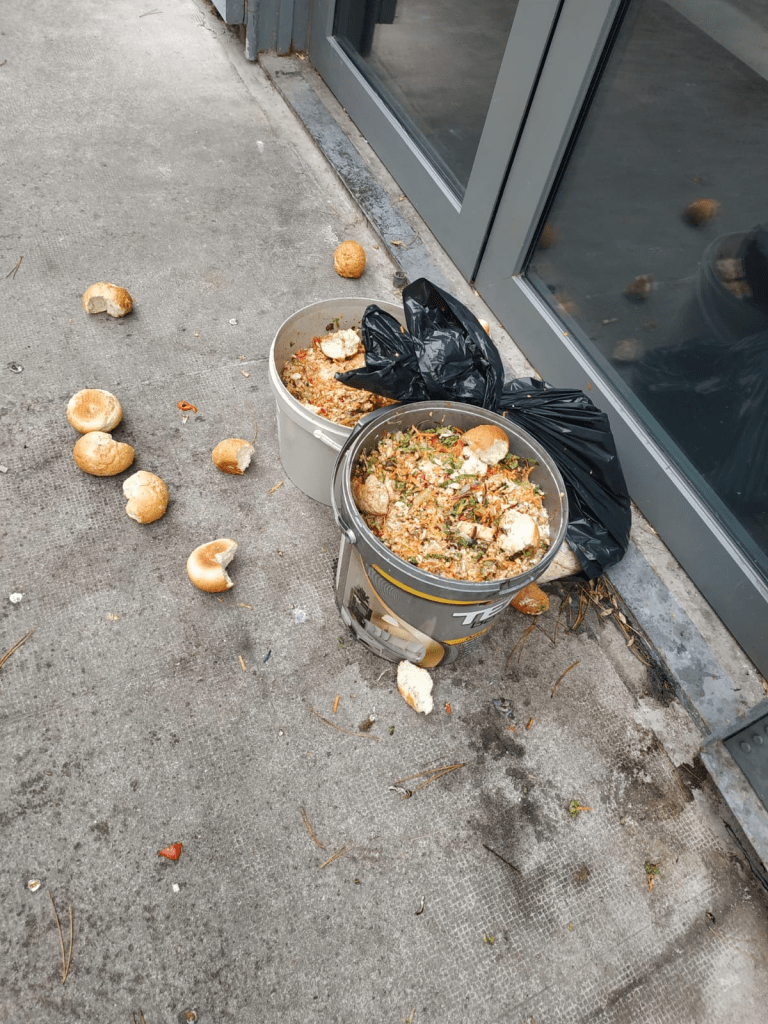

Picture 1: Wasted bread and salad at the AGU’s cafeteria in a day

As it can be seen in picture 1 only the amount of waste bread and salad is around two buckets and this is not the only food that is wasted at the cafeteria.

Model Solutions:

Our bat group plans to decrease wasted foods by changing the food providers or changing menu so that people who eat in the cafeteria may like the foods more. Also, we are going to arrange the portions given in the cafeteria.  

In addition, we have an alternative plan to feed the animals in animal shelters with wasted foods.


1. The catering company will be changed, so the menu and also the taste of the food change. From the survey results, it is certain that most of the students are wasting their meals because they don’t like their tastes. Given the fact that Kayseri is a big city and there will probably be better food providers around the city, it shouldn’t be hard to find a provider that students actually like eating from. It will also help to refresh the mood around the university where for years eating the same types of food. Therefore, both students and the environment will get benefited from this solution. To change the food providers, the administration of AGU should find a food provider to provide lunch in the cafeteria. Also, we are going to need a catering company that contracts with the university. It is not going to cause a cost.

In contrast, maybe university’s dining hall will have a catering company that provides meals for a lower cost and has more delicious foods. But the process of finding a new food provider will take some time.

2. Just the menu alone can be changed by analyzing what students are wasting the most. How the plan is going to work with the help of the food serving crew. They are the ones who are washing the dishes, taking up the leftovers and unloading the wasted food so they will be aware of what is being wasted the most. Each week the crew will detect the most wasted food and next week that food type will be replaced with another type of food and the research will go on. It is expected that within a year we will be able to determine the exact food combination which minimizes the wasted food.

This method requires less work and resources than the first one but it will not bring the same amount of refreshment which comes with the first method. And also it requires a long time to determine the most wasted foods. There may be another issue: we are not sure about the new foods that are not going to be wasted. So during the period (we assume it is 1 year), the waste will run on.

3. The default portions will get smaller and bigger portions will be given to the ones who requested.  According to the survey we have conducted, while some people think that the given portions are not enough, some people think the opposite. None of them can be claimed to be wrong. It is about their desires and capabilities. Therefore, we designed this simple solution to leave the decision into students whether they want the previous “big” sized portions or the new small ones. Actually, the students can switch the portion to a smaller one by talking with the food serving crew. But in reality, most of the students are being timid to express themselves or they will not want to linger when some people wait in order to take the foods. For that, the crew can intentionally prepare small and big portions together to leave the decision to the students or an informing paper can be hanged somewhere in the dining hall to inform students that they can decide the size of the portions. 

For this solution crew and people who eat in the cafeteria will take the stage. When people decide about the size of portions, the crew is going to rearrange the portions. But there may be a disagreement about the sizes. So it is not going to be an exact solution for the waste.

Another way to arrange the portions is self-service. In this way, everyone gets the amount of food that they are capable to finish. This solution also requires fewer people in the serving crew and by making the students decide and prepare their portions; therefore, making the students will be more pleased with the “IKEA effect”.

In this solution, students are the ones that arrange their portions. There will be no cost; on the contrary, the catering company will have fewer employees so they will pay less. But there are possible problems: there will be congestion to take the food.

Another problem is that there should be a crew to check if the students are taking more food than they should and it shouldn’t be ignored that there will be students who will try to break the limits. Therefore it will serve for the exact opposite purpose by increasing the waste.

4. The wasted food will be sent to feed the animals in an animal shelter.  Whatever we try, there will be always some waste. This method is the addition of all the methods above to make use of wasted food while taking care of the animals. For this solution, the administration of AGU and the municipality will be the stakeholders. Firs administration of AGU should concert with the animal shelter and also with the Kocasinan municipality to send a vehicle to take up the wasted foods daily. It will cause some costs (to fuel the vehicle). Also, it should be sustained for long times. But in the end, there will be not waste as much as before.

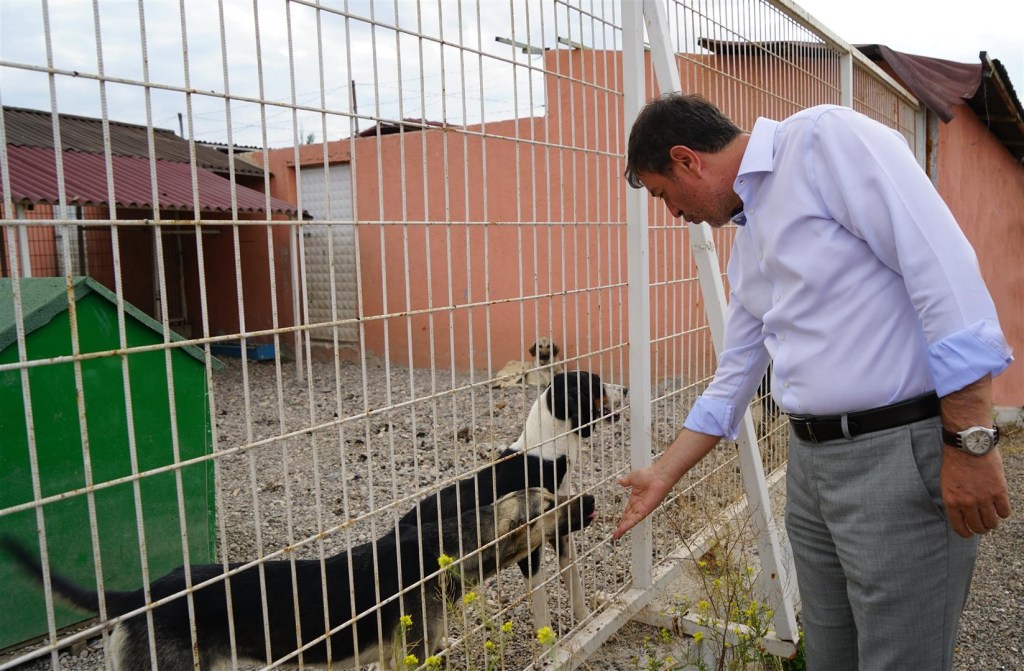
Also, this solution is easily applicable for instance the rector of Çankırı Karatekin University has instructed that leftovers from the University’s cafeteria are given for the animals in an animal shelter (Çankırı Belediyesi Sokak Hayvanları Bakım ve Rehabilitasyon Merkezi) in 2018 and it has been practicing for 2 years[2].
https://krtknadmn.karatekin.edu.tr/files/karatekin/bar%C4%B1nak/barinak/1.JPG

Picture 2: A photo from Çankırı Karatekin University about what have done with waste food [2].

References
  1. https://docs.google.com/forms/d/1dmyytbxtf2yFA89UxEFJUmf-dZqMO552rEjpSeH6yR0/edit#responses
  2. https://basin.karatekin.edu.tr/caku%E2%80%99den-ornek-uygulama-16639-haberi-icerigi.karatekin

Model Solution

Problem: AGU students who eat in the university’s dinner hall are taking meals which they can’t finish all of them or they don’t want to eat. Therefore ending up wasting food.

Survey results: 41.6% of the students waste the food because they simply don’t like them. 37% think that the food is not cooked well. And the remaining students have mixed opinions like they think the portions are too big or they are spicy/salty or they are eating the food before they are hungry. We have also conducted this research to find out what are the most wasted foods. The most wasted meal is the main meal by 58% percent followed by rice (41%) and soup with 37%.

Model Solution: Our BAT group’s solutions for the food wasting in the university’s dinner hall are as following:

1.Food providers can be changed, so menu and also the taste of the foods change. From the survey results it is certain that most of the students are wasting their meals because they don’t like their tastes. Given to the fact that Kayseri is a big city and there will probably be better food providers around the city it shouldn’t be hard to find a provider which students actually like eating from. It will also help to refresh the mood around the university where for years eating the same types of food. Therefore, both students and environment will get benefited from this solution.

2. Just the menu alone can be changed by analysing what students are wasting the most. How this plan will work is that in each week, the food serving crew should be interrogated. They are the ones who are washing the dishes, taking up the leftovers and unloading the wasted food so they will be aware of what is being wasted the most. Each week the crew will detect a most wasted food and in next week that food type will be replaced with another type of food and the research will go on. It is expected that within a year we will be able to determine the exact food combination which minimizes the wasted food. This method requires less work and resources from the first one but it will not bring the same amount of refreshment which comes with the first method. 

3. The default portions will get smaller and bigger portions will be given to the ones who requested. This method has been planned again by taking the survey results into consideration. While some people think that the given portions are not enough, there are also people who think the opposite. None of them can be claimed to be wrong. It is about their desires and capabilities. Therefore, we designed this simple solution to leave the decision into students whether they want the previous “big” sized portions or the new small ones. Actually, the students are able to switch to a smaller portion by talking with the food serving crew. But in reality most of the students are being timid to express themselves. For that, the crew can intentionally prepare small and big portions together to leave the decision to the students or an informing paper can be hanged somewhere in the dining hall to inform students that they can decide the size of the portions. 

Another way to arrange the portions is self-service. In this way everyone gets the amount of food that they are capable to finish. This solution also requires less people in the serving crew and by making the students decide and prepare their portions therefore making the students will be more pleased with the “IKEA effect”. The problem with this method is that there should be a crew to check if the students are taking more food than they should and it shouldn’t be ignored that there will be students who will try to break the limits. Therefore serving for the exact opposite purpose by increasing the waste.

4. The wasted food will be sent to feed the street animals. Whatever we try, there will be always some waste. This method is the addition for all the methods above to make use of the wasted food while taking care of the street animals. 

The top 10 foods contribute to CO2 emmisions

Week 4

Nilgün Baykara

//https://www.businessinsider.com/the-top-10-foods-with-the-biggest-environmental-footprint-2015-9

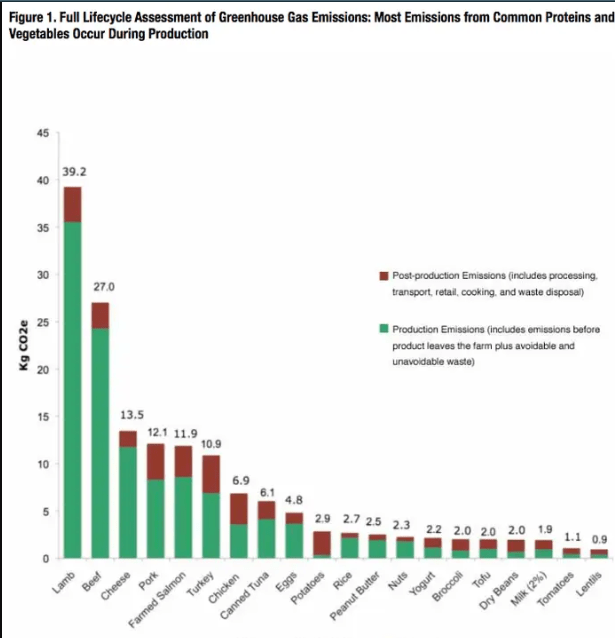
There are some foods like lamb, beef, cheese, pork, farmed salmon, turkey, chicken, canned tuna, eggs, potatoes that are on the top 10 producing CO2 emissions.

The Environmental Working Group, a Washington, D.C.-based research and advocacy organization, and CleanMetrics Corp., a Portland, Ore.-based environmental firm, put out a 2011 report called the “Meat Eater’s Guide to climate change + health.” By benefiting from this report we can look at CO2 concentration coming from these foods and reasons for why they contribute to CO2 emissions.

This graph shows how much CO2 produced from per 1 kg of the foods.

What are the reasons behind CO2 emissions coming from these foods?

According to the report :

For lamb, the sources of CO2 are animals’ digestion (aka lamb farts), their feed, manure management and other farm operations. For beef, methane from cows and process the production of beef are the reason behind CO2 production. For pork, CO2 comes from raising the animals, but mostly from processing, transporting, and cooking the meat. What about farmed salmon? It causes CO2 emissions because of feed production, electricity generation and onfarm fuel combustion. For turkey, feed productions, processing and home cooking are causing greenhouse gases. CO2 coming from chicken is because of production, processing, and cooking of the meat, as well. When we look at tuna, we see most greenhouse gases (68%) from tuna caused by transporting it. Processing and packaging generate the rest of the CO2. For eggs feed production, on-farm energy use, nitrous oxide gas from the poultry litter and fuel combustion can be counted as the sources of greenhouse gases. Finially for potatoes, greenhouse gases are mostly coming from cooking (how and how long).

Reducing Carbon Footprint – Tips (Part 2)

#week 4 / Onur ÇAKICI

As it was mentioned at the last week’s post, I’d like to give you a couple of tips too, which van help you to reduce your own carbon footprint.

Save water

Water is a precious resource that is becoming scarce in many countries such as Egypt, Mexico, and Australia. And even if you do not live in one of these arid countries, you may be wearing or using goods and consuming foods produced in those places, thus contributing to their water debt. One of the major impacts we can have personally is by moving towards a vegetarian diet, which requires about half the water to produce than a meat-based diet. It also makes sense to reduce your personal water consumption by practicing water conservation in your daily life:

  • eat a mainly vegetarian diet
  • only use the dishwasher when full and select the program with low water usage
  • if you wash-up by hand, start with a half-empty bowl and rinse the dishes back into your washing-up water rather than down the plughole
  • use filtered tap water for drinking rather than energy and water-intensive bottled water
  • take a shower rather than a bath and shower less often in less time!
  • turn off the taps when brushing your teeth or washing or shaving
  • clean your clothes less often and only wash full loads
  • use ‘grey’ water to water your garden and house-plants.

Shop wisely

Think before you buy! Do you actually need this? Can you find a better, greener alternative?

  • use a shopping list to avoid those impulse purchases
  • avoid products that use lots of packaging
  • buy in bulk to save money and reduce packaging
  • check the label – a long list of ingredients generally means a heavily processed item with a high carbon footprint
  • frozen food has the highest carbon footprint, followed by canned, plastic, glass, then cardboard
  • and please don’t buy bottled water.

Shop local

Think about where you do your shopping. Do you drive to the local shop when you need something – why not walk? Does your supermarket support green initiativesand offer local, organic foods? And think about where food comes from – if it is from the other side of the world, it will have a high transportation footprint.

A weekly food shop is a habit many of us follow…but is it an efficient use of time and resources? The average household throws away a third of the food that they buy as it is so easy to over-shop in those tempting supermarkets. After all, they are designed to sell us as much as possible, whether we need it or not.


Reuse and recycle

Think creatively about how you can reuse and recycle. Glass jars and plastic containers make great storage options. Take your own shopping bags and say no to plastic bags. Take reusable produce bags for your fruit and vegetables – if you use the ethylene-absorbing bags it prolongs shelf-life too. And when you can’t reuse, make sure you recycle whatever you can.


Grow your own food

A great way to save money and to have an organic diet, get fit and reduce your carbon footprint is to grow your own fruit and vegetables. If you have a garden or backyard, then it is a fun way to make sure your family has access to affordable, healthy, pesticide-free food. And even if you live in an apartment, what about using your balcony or even the communal outside areas? Failing that, there is a growing movement (ha!) in Australia and The States to set up community gardens.

Resource: http://www.greeneatz.com/

Week 3

This week is going to be all about the creative ways we can use the plastics we already have from our regular use.

So now we’ve switched to a less plastic-consuming way to drink clean and safe water (my previous post). But… what about all the empty bottles we have from when we used to buy water in plastics every now and then? Well if you haven’t thrown them (all) away, you actually can reuse these bottles in very simple way even around your house or place of living.

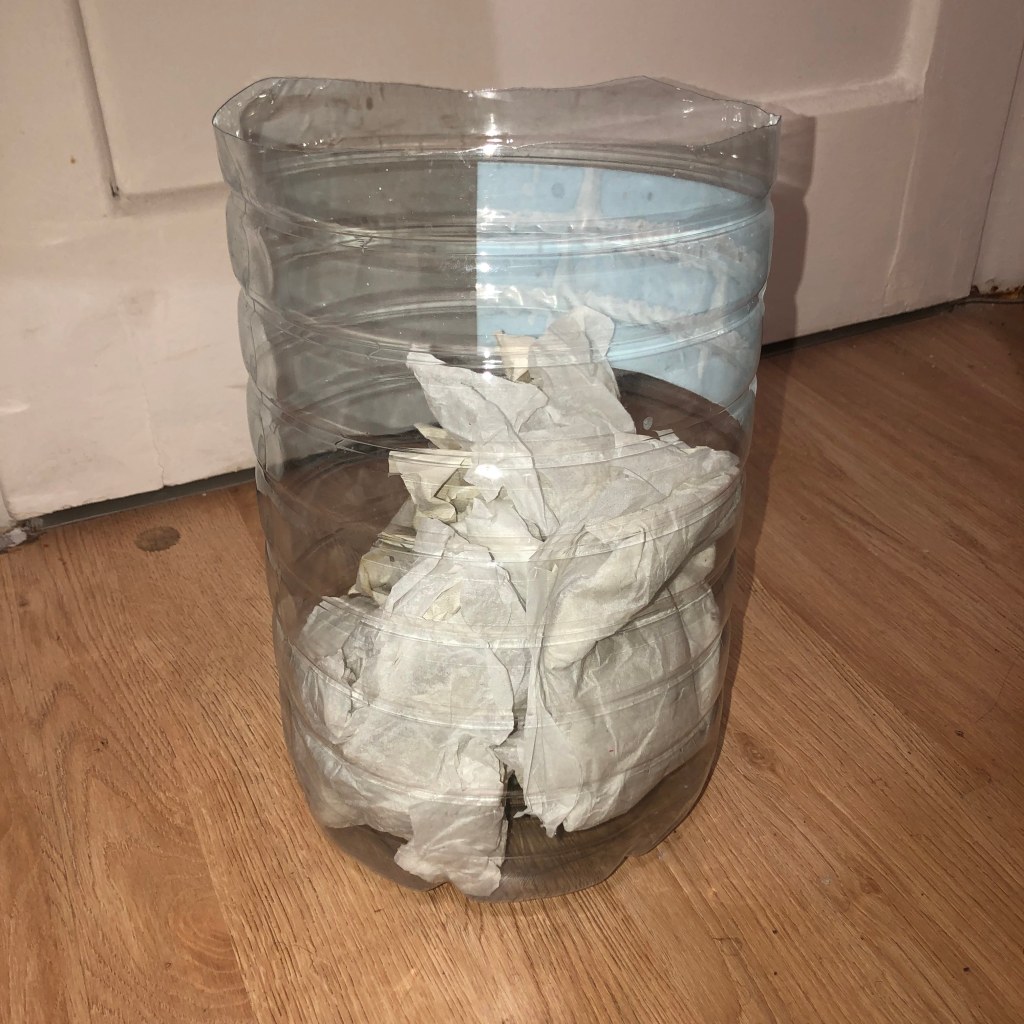
A plastic bottle only becomes waste if you have no use for it anymore. And luckily we just used these bottles for water so we don’t have to spend any time or resources cleaning anything or getting anything in shape to be used again for something else. And the ‘something else’ that I’m going to use mine for, is a trash bin.

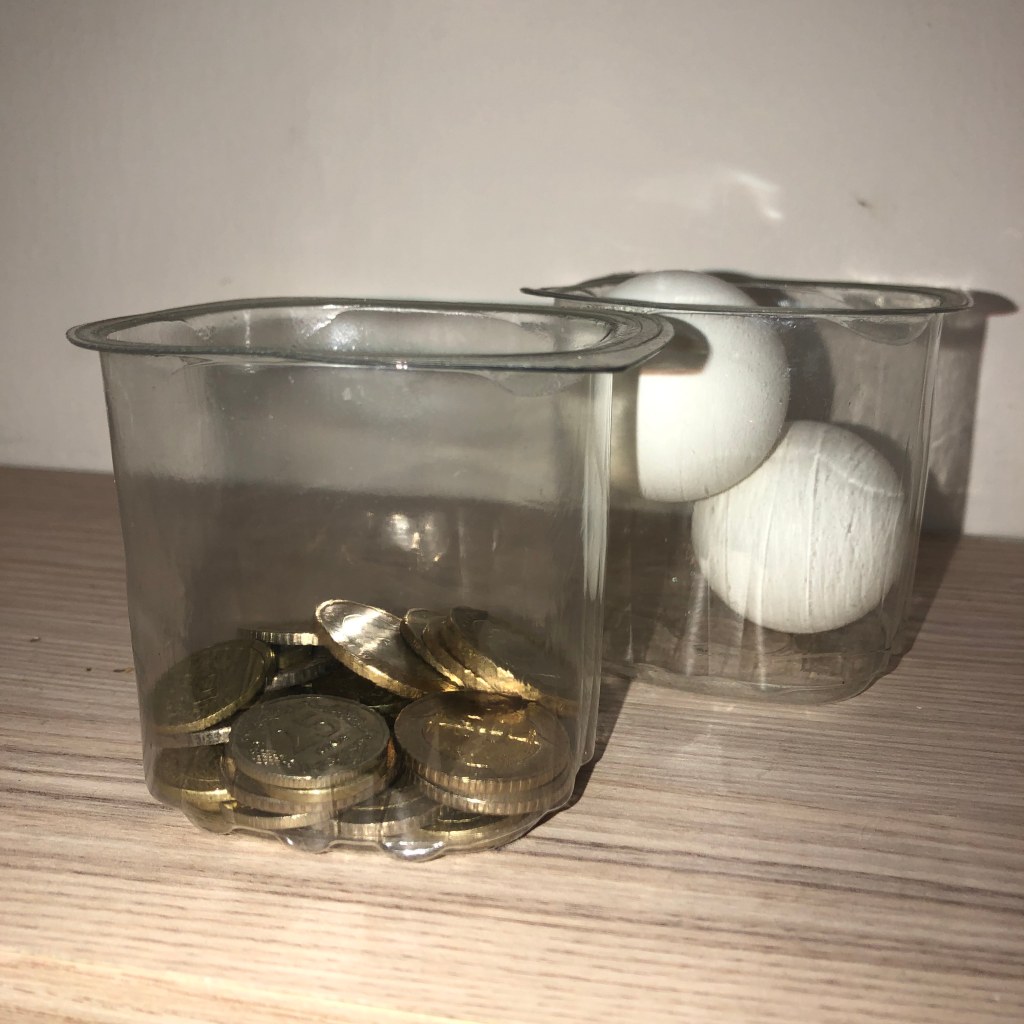
Holders for coins and ping pong balls
Photo credit: Author

I have a friend and housemate at my university, studying architecture, who’s a little fascinated with reusing materials or pieces of one thing to make or build something else. I believe it’s the blend of conservation and creativity that interests him. Anyways we both decided to take the empty 5 litre and 8 litre bottles and reuse them as mini trash bins that we placed conveniently around the house. We used old plastic bags inside them as trash bags too. For smaller bottles, we use them now as containers for detergent, salt, sugar and the likes. I’ve also even decided to use empty 200ml plastics as coin holders that i have on my shelf in my room. He keeps everything else as “material” for future school or personal projects, turning everything now into basically something useful.

Empty plastic bottle turned to trash
Photo Credit: Author

You too can decide to take something you don’t use anymore and find ways in which they can be beneficial to you. It could be with empty plastic bottles or plastic bags, the fabric from old clothes, it could even be paper. Any way that we change how we use or dispose things like this, little or not, can eventually become for our environment.

Together, we can make a difference.

By Feyisayo Akinola

Week 2 – Drink Water With Less Plastic Waste

So today is the first day we actually take a step in reducing our (my) plastic consumption with regards to water.

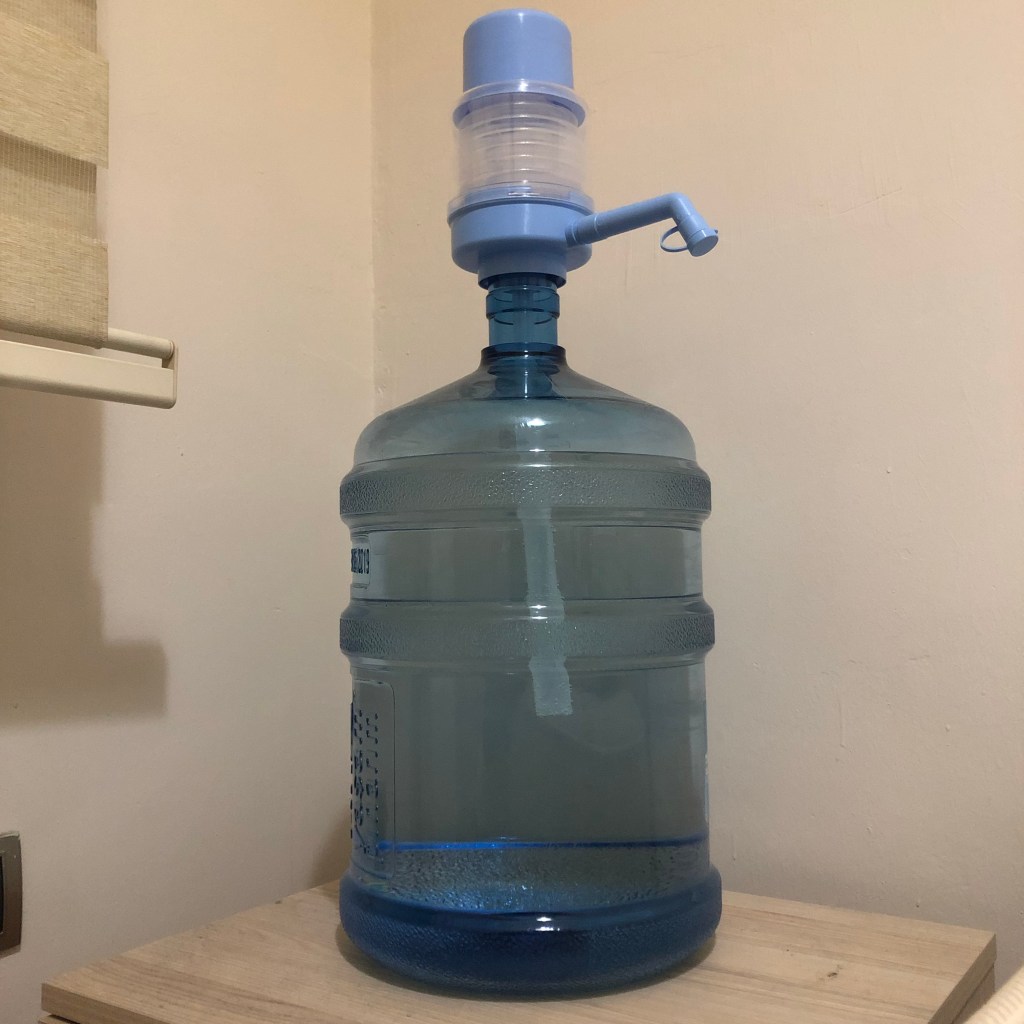
As i wrote in my previous post, to reduce and completely eliminate my plastic consumption with water, i planned on switching to a regular water home-delivery service that would result in zero plastic waste on my end.

The water service i switched to (as opposed to buying water in plastics regularly).
Photo Credit: Author

I did my research and with the help of a mobile application, i learned of the water companies that offer these delivery services in my city Kayseri. Quite effective, the app even lets you create a subscription to a company so that every time you order, you don’t have to resend necessary information like your address or phone number- this makes orders with the app significantly easier. As a bonus feature, the app also gives information of the pH value of the water provided by all the different companies for you to compare, and of course i went with the one with the best or healthiest pH value.

Apparently the company behind the app is working UNICEF to donate clean water enough for 5 children for one day with every order you make with their app. The app is called BiSU by the way. If you’re reading this and you’re in Turkey and you’re interested in switching to a water plan that contributes less to your overall plastic footprint, then i suggest using the app. And like myself, you too can help be a part of giving clean water to children in need all around the world.

Together, we can make a difference.

By Feyisayo Akinola

W2-TREE PLANTING

Plant Trees Around The World

Trees are essential to maintaining our climate and biodiversity. Trees contribute to the global environment by improving air quality, conserving water, preserving soil, and supporting wildlife. During the process of photosynthesis, trees take out carbon dioxide from the atmosphere and produce the oxygen we breathe.

Trees are the largest plants on the planet and the longest living species on earth, providing a link between the past, present and future. Some Oak trees for instance can live for over 1000 years, so a woodland planted today could easily outlive all of us and provide a long term carbon store.

By supporting international tree planting projects, you can compensate for your environmental impact, protect wildlife and benefit local communities.

My Commitment

Nilgün Baykara

During the week I tried to lower the wasted foods in the cafeteria. First of all I just want the man or woman who is serving the foods, to decrease the portions so that I am going to eat all of the food on my plates. Then if still I couldn’t finish my foods, I asked my friends if they want to eat my foods too. Some of my friends ate because foods are the ones they like. Also I avoided from taking the foods that I do not like so much. The other thing was that when I am not hungry enough I didn’t get lunch. Another thing I tried to do is to make my friends not to waste the foods.I said them if they don’t like the food and they are not going to be able to finish, do not take from that food. Some of them did not take the foods. Sometimes they wanted smaller portions from the servers as I did. So in the end they finished the other foods. They didn’t waste the foods.

Reducing Carbon Footprint – Tips (Part 1)

#week 3 / Onur ÇAKICI

Today I want to share the information about how we can decrease our carbon footprint by explaining in 4 different tips.

Eat vegetarian

foods-carbon-footprint-7

Livestock farming produces from 20% to 50% of all man-made greenhouse gas emissions.

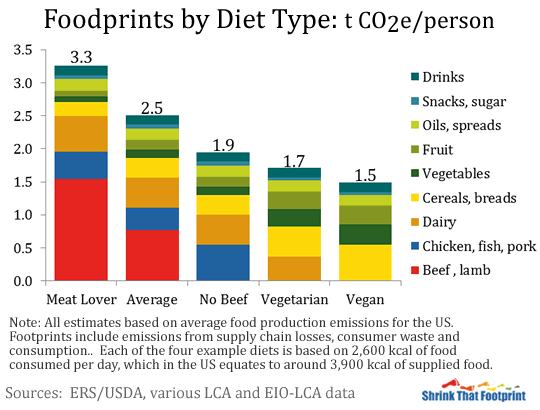
Shrink That Footprint’s chart shows that a meat lover has the highest carbon footprint at 3.3 tons of greenhouse gas emissions. A vegan diet has the lowest carbon footprint at just 1.5 tons CO2e (Carbon Dioxide Equivalent). You can reduce your foodprint by a quarter just by cutting down on red meats such as beef and lamb.

The carbon footprint of a vegetarian diet is about half that of a meat-lover’s diet.

It’s good for the animals too!  Most animals are raised in factory farms where they live in horrific conditions. The factory workers also suffer from poor wages and dangerous working practices. Factory farms are heavy polluters of the air and ground. The meat they produce is also polluted with superbugs. Over 3.5 million people get sick from eating ‘dirty’ meat every year in the US.

It’s good for you too!  Vegetarians live longer than meat-eaters. Vegetarians are slimmer than meat-eaters. Vegetarians have a lower risk of getting heart disease, high blood pressure, diabetes and cancer.

  • use proteins such as beans, lentils, tofu, tempeh and quorn to replace meat, cheese and eggs
  • make sure you are getting enough iron and zinc by including lots of wholegrains, beans and a variety of vegetables
  • invest in some vegetarian or vegan cookery books and have fun experimenting
  • don’t rely on vegetarian processed foods.


Bring back home-cooking

Take control of the food you eat and base your meals on natural foods such as vegetables, fruits, whole-grains, beans and lentils with a little meat and fish:

  • discover the simple pleasures of preparing and eating your own meals
  • check out Vegetarian Recipes for lots of tasty ideas
  • improve the health of you and your family – see more at Vegetarian Nutrition
  • plan your meals ahead to reduce wastage
  • save your leftovers and create a new meal with them
  • if you can, make your own compost with uncooked vegetable scraps.

Cooking smartly

Did you know that a gas oven only uses 6% of its energy to cook? And an electric oven is not much better at 12%. If you use the oven on a warm day, you will also heat up the room and need to turn on a fan or air-conditioning. In fact, the most efficient cooking method is simmering on the stove-top.

  • eat more raw foods that do not need cooking
  • use the stove-top whenever possible
  • next best is the microwave as it uses 50% less energy than an oven
  • use the oven sparingly and smartly…reduce preheating, cook multiple foods, turn off early
  • use electric kettles to boil water for cooking or drinking.

Eat Organic

Organic farming methods for both crops and animals have a much lower impact on the environment than conventional methods. Organic-certified farms must use natural methods for soil fertilisation, weed prevention and pest control. Antibiotics and growth hormones cannot be used to raise food animals, and there are standards of care which prevent cruelty to livestock. Genetically-modified and irradiated foods cannot be labelled organic and its better to avoid these processes which are not proven to be safe for us or the food chain.

Organic food is better for you too! Crops are grown in fertile soils that are full of nutrients – and these end up in your food and then in you. Livestock are able to roam the fields and eat their natural food – grass – rather than being force-fed corn. And this leads to a much less fatty meat that keeps your heart healthier.

In the next week, I will give you more tips to reduce our carbon footprint. Looking forward to see you next sunday.

Resource: http://www.greeneatz.com/

Climate Change Food Calculator

week 3

Nilgün Baykara

//https://www.bbc.com/news/science-environment-46459714

Scientists proved that some food have a big impact on environmental footprint. In my previous post, there are some foods causing CO2 emissions. But majority of people do not know how much they contribute to climate change by eating these foods and what kind of foods have a bigger environmental impact. If we could see how the food choices we made impacts on the environment, we may reduce our CO2 emissions coming from these specific foods.

Good news!!!

There is already a food calculator, designed by Prina Shah, developed by Felix Stephenson and Becky Rush.

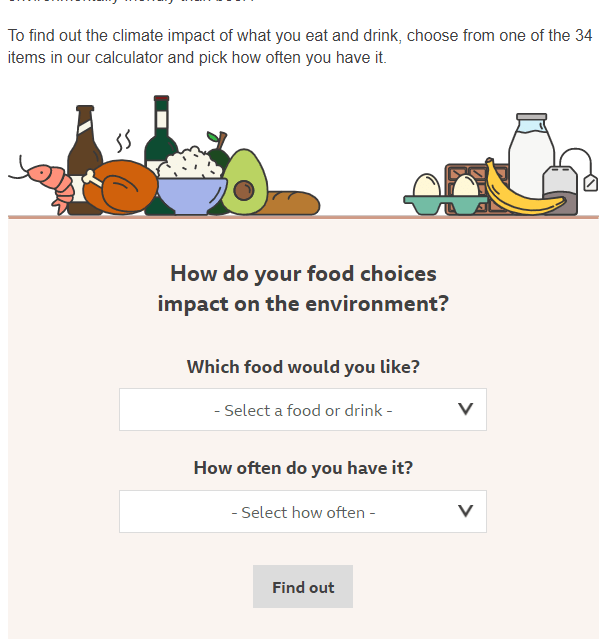
To see how much a food contributes to climate change, the only thing you need to do is to choose which food it is and how often do you consume it.

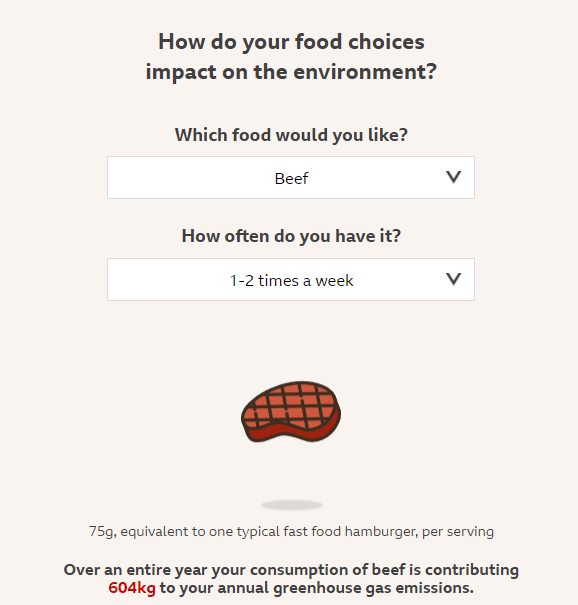
Let’s say you choose beef and you are eating it 1-2 times a week.


Firstly it calculates average amount of beef you are consuming as it is shown in the figure.

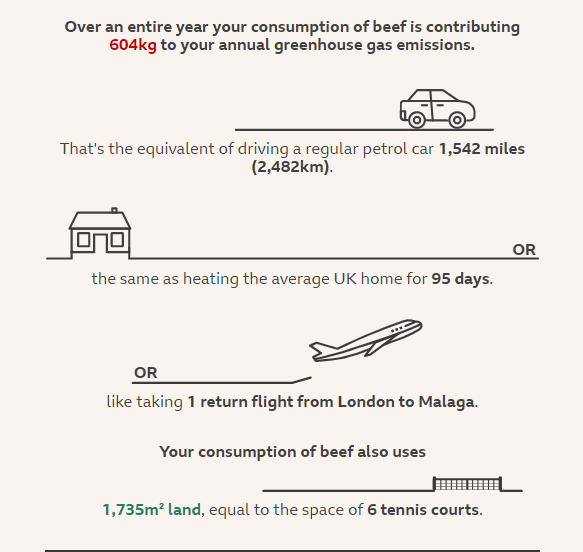
Then the estimated CO2 production is converted into what it means in different areas to understand better how it contributes CO2 emissions.

Also in the BBC page it is explained that how the calculator made, how the size of the portions are estimated. If you are interested in then I suggest you to check the website… 😉