The top 10 foods contribute to CO2 emmisions

Week 4

Nilgün Baykara

//https://www.businessinsider.com/the-top-10-foods-with-the-biggest-environmental-footprint-2015-9

There are some foods like lamb, beef, cheese, pork, farmed salmon, turkey, chicken, canned tuna, eggs, potatoes that are on the top 10 producing CO2 emissions.

The Environmental Working Group, a Washington, D.C.-based research and advocacy organization, and CleanMetrics Corp., a Portland, Ore.-based environmental firm, put out a 2011 report called the “Meat Eater’s Guide to climate change + health.” By benefiting from this report we can look at CO2 concentration coming from these foods and reasons for why they contribute to CO2 emissions.
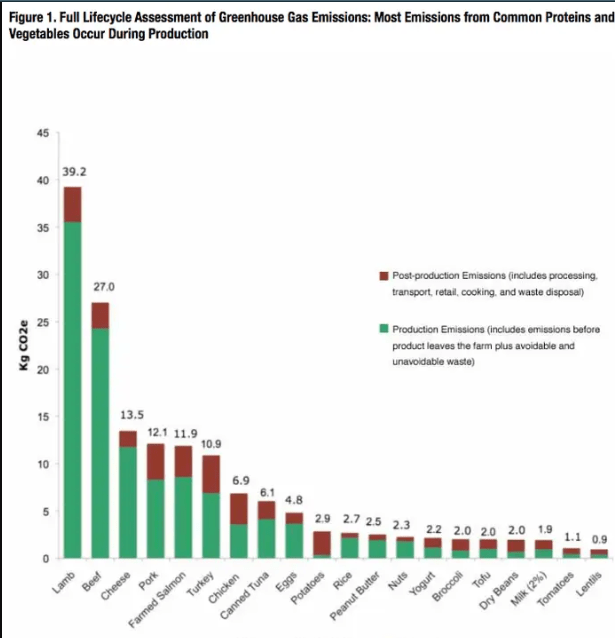
This graph shows how much CO2 produced from per 1 kg of the foods.

What are the reasons behind CO2 emissions coming from these foods?

According to the report :

For lamb, the sources of CO2 are animals’ digestion (aka lamb farts), their feed, manure management and other farm operations. For beef, methane from cows and process the production of beef are the reason behind CO2 production. For pork, CO2 comes from raising the animals, but mostly from processing, transporting, and cooking the meat. What about farmed salmon? It causes CO2 emissions because of feed production, electricity generation and onfarm fuel combustion. For turkey, feed productions, processing and home cooking are causing greenhouse gases. CO2 coming from chicken is because of production, processing, and cooking of the meat, as well. When we look at tuna, we see most greenhouse gases (68%) from tuna caused by transporting it. Processing and packaging generate the rest of the CO2. For eggs feed production, on-farm energy use, nitrous oxide gas from the poultry litter and fuel combustion can be counted as the sources of greenhouse gases. Finially for potatoes, greenhouse gases are mostly coming from cooking (how and how long).
My Commitment

Nilgün Baykara

During the week I tried to lower the wasted foods in the cafeteria. First of all I just want the man or woman who is serving the foods, to decrease the portions so that I am going to eat all of the food on my plates. Then if still I couldn’t finish my foods, I asked my friends if they want to eat my foods too. Some of my friends ate because foods are the ones they like. Also I avoided from taking the foods that I do not like so much. The other thing was that when I am not hungry enough I didn’t get lunch. Another thing I tried to do is to make my friends not to waste the foods.I said them if they don’t like the food and they are not going to be able to finish, do not take from that food. Some of them did not take the foods. Sometimes they wanted smaller portions from the servers as I did. So in the end they finished the other foods. They didn’t waste the foods.

Climate Change Food Calculator

week 3

Nilgün Baykara

//https://www.bbc.com/news/science-environment-46459714

Scientists proved that some food have a big impact on environmental footprint. In my previous post, there are some foods causing CO2 emissions. But majority of people do not know how much they contribute to climate change by eating these foods and what kind of foods have a bigger environmental impact. If we could see how the food choices we made impacts on the environment, we may reduce our CO2 emissions coming from these specific foods.

Good news!!!

There is already a food calculator, designed by Prina Shah, developed by Felix Stephenson and Becky Rush.

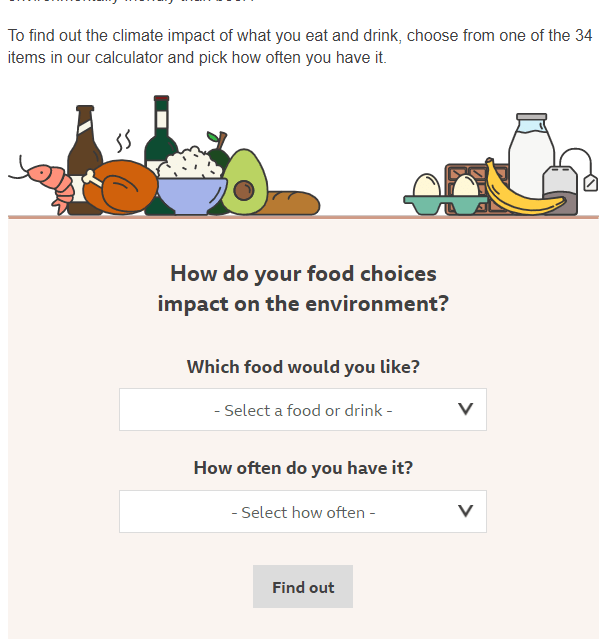
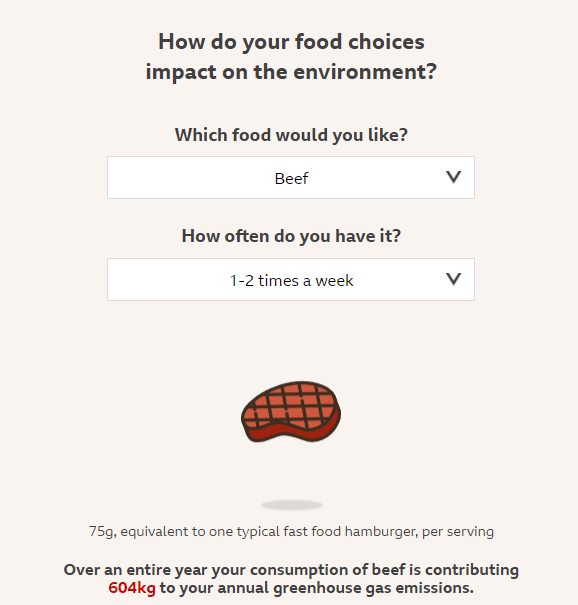
To see how much a food contributes to climate change, the only thing you need to do is to choose which food it is and how often do you consume it.

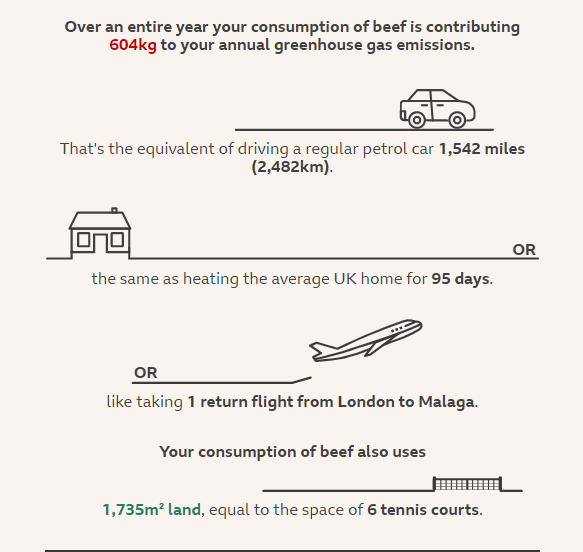
Let’s say you choose beef and you are eating it 1-2 times a week.


Firstly it calculates average amount of beef you are consuming as it is shown in the figure.

Then the estimated CO2 production is converted into what it means in different areas to understand better how it contributes CO2 emissions.

Also in the BBC page it is explained that how the calculator made, how the size of the portions are estimated. If you are interested in then I suggest you to check the website… 😉

The Costs of the Beef

week 2

Nilgün Baykara

Beef production is one of the main contributor to CO2 emmision. The production processes are the treats for our environment. When we concider how big the beef concumption in the world espcially in America, we would start to think about the consequences.

Even the gas cows make, produces methane which has 21 times bigger impact on the climate change than CO2. 🙂 This is amusing but real.

The amount of burgers eaten in America in a year, produces greenhouse gas as 34 coal-fired power plants do in a year. I recommend you to video below.

And see how big the impact of the beef on our environment!!

Meat Free Monday

Meat Free Monday is a global campaign based on not eating meats on Mondays. It is Launched by Paul, Mary and Stella McCartney in 2009.  Eating meat-free one day a week could reduce the climate impacts of the foods. It may seem like a small step, but when it is considered lots of people do not eat on Mondays, it could be a huge movement. It is a project that started to achieve these goals. Now, the campaign held on in the UK, US, Canada, Australia, Belgium, Brazil, Taiwan, Japan, Germany, and Russia. São Paulo which is a city in Brazil (with 10 million people), has the Meatless Mondays. No matter Brazil is one of the countries that exports meat mostly in the world.

What Can I Change In a Week?

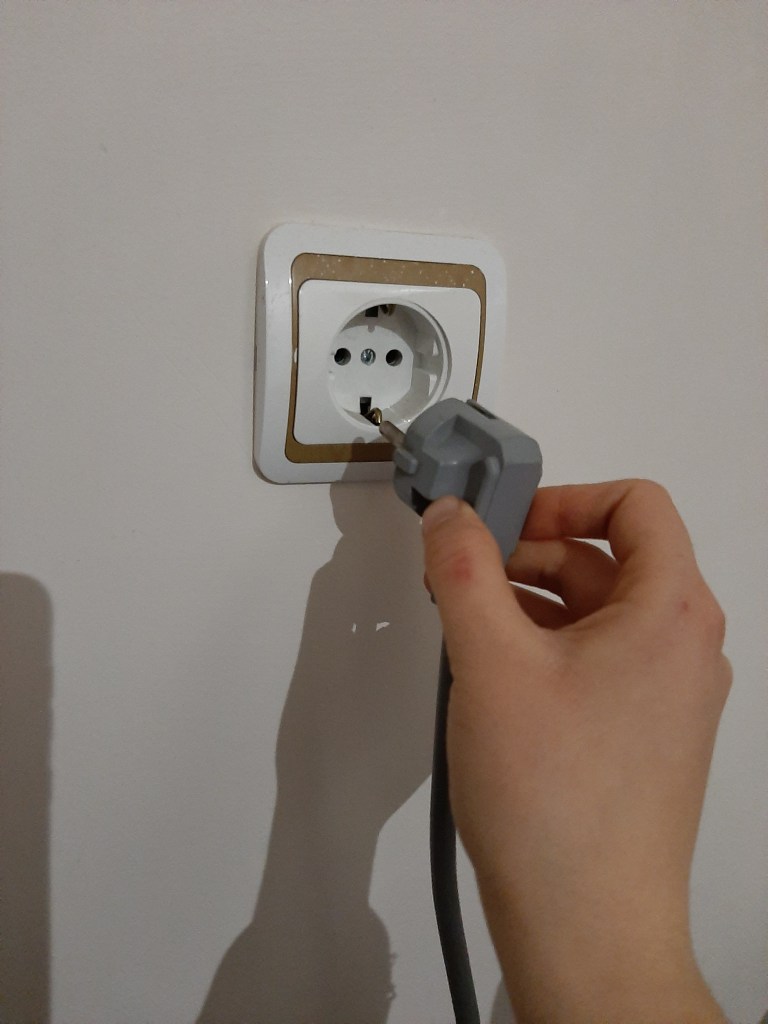
We don’t know how we contribute to CO2 emission. We are not aware of how the things we have done affect our environment and climate. So during one week, I considered my actions and I tried to lower my CO2 emission. Firstly I have tried to reduce the use of electricity at home. I wanted my family to be careful about it. So we have always unplug the electrical devices when not in use.

 Also, we turned off the lights when it is unnecessary.

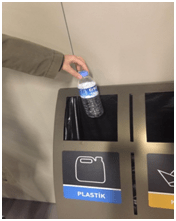
I always leave my phone on the charge during the night. But I just turned off my phone when I was sleeping during the week. I tried to use recycling bins for recyclable materials.


The photo was taken when I was throwing my plastic bottle into the recycling bin.

If everyone would be careful about the usage of electricity, we could reduce the emissions from coal-fired electricity plants. On a global level, if people would start to recycle more, we could save more energy.

Carbon Footprint Due to Food and My Observations

The problem is the carbon emissions due to foods. Food undergoes some steps like growing, rearing, farming, processing, transporting, storing, cooking and disposing of. And all of these steps are the cause of CO2 emission. The more we eat meat, the more CO2 produced. The more CO2 concentration in the air means the more danger of climate change we are in.

Here are my some observations:

At home, my mother cooks foods that contain meat or just meat at least three times a week.

When she cooks soup or rice, she adds chicken broth.

For breakfast, we may have eggs, bologna, sausage and more.

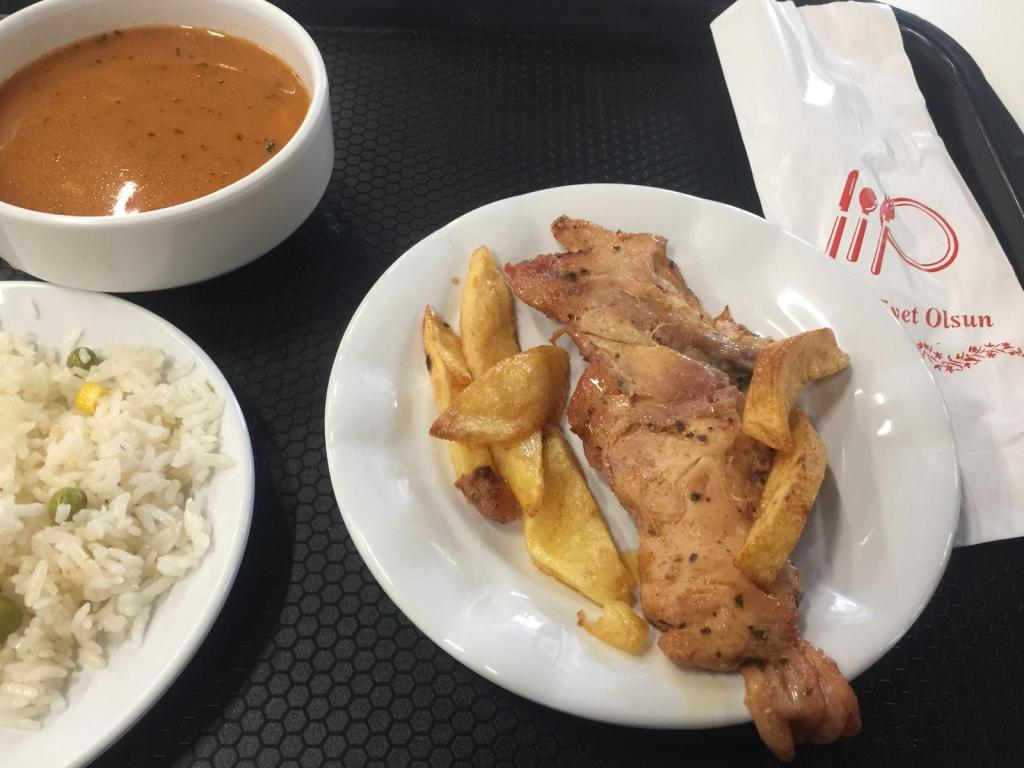
In the refectory, 2 meals are served for the main course. One of the meals always includes meat. I see people always choose a meal with meat.

It is one of the menu we had in the refectory.

My friends staying in a dormitory, when they do not like the meal provided in the dormitory, I heard that they order some foods contains food. Or sometimes they go to a mall to eat pizza, doner, ıskender, etc.

I see people eating fast food like hamburgers, pizza all the time.

If people continue to eat too much meat as I observed, we cannot be able to stop our carbon footprint. Because all steps until meat comes to our plates contributes to climate change. The problem does not finish with people around me. We should concider all people in the world. It shows how big the problem is.