Week 4
Nilgün Baykara
//https://www.businessinsider.com/the-top-10-foods-with-the-biggest-environmental-footprint-2015-9
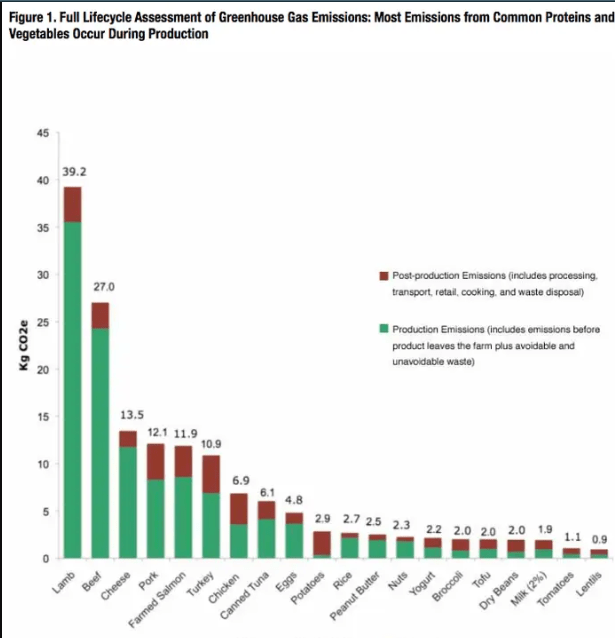
There are some foods like lamb, beef, cheese, pork, farmed salmon, turkey, chicken, canned tuna, eggs, potatoes that are on the top 10 producing CO2 emissions.
The Environmental Working Group, a Washington, D.C.-based research and advocacy organization, and CleanMetrics Corp., a Portland, Ore.-based environmental firm, put out a 2011 report called the “Meat Eater’s Guide to climate change + health.” By benefiting from this report we can look at CO2 concentration coming from these foods and reasons for why they contribute to CO2 emissions.
What are the reasons behind CO2 emissions coming from these foods?
According to the report :
For lamb, the sources of CO2 are animals’ digestion (aka lamb farts), their feed, manure management and other farm operations. For beef, methane from cows and process the production of beef are the reason behind CO2 production. For pork, CO2 comes from raising the animals, but mostly from processing, transporting, and cooking the meat. What about farmed salmon? It causes CO2 emissions because of feed production, electricity generation and onfarm fuel combustion. For turkey, feed productions, processing and home cooking are causing greenhouse gases. CO2 coming from chicken is because of production, processing, and cooking of the meat, as well. When we look at tuna, we see most greenhouse gases (68%) from tuna caused by transporting it. Processing and packaging generate the rest of the CO2. For eggs feed production, on-farm energy use, nitrous oxide gas from the poultry litter and fuel combustion can be counted as the sources of greenhouse gases. Finially for potatoes, greenhouse gases are mostly coming from cooking (how and how long).
 FOOD CONSUMPTION